

Most people picture the Harlem Renaissance through gallery walls and framed paintings. The fuller truth is stranger and more compelling. The artwork from the Harlem Renaissance lived on speakeasy walls, behind theatrical stages, on playbills pressed into the hands of theatergoers stepping into a new cultural world. Visual artists were the architects of atmosphere during the Jazz Age, transforming Harlem’s cramped, smoky underground clubs and intimate theaters into mythic storytelling spaces where music, movement, and image fused into something nobody had experienced before.
Table of Contents
- Key takeaways
- Artwork from the Harlem Renaissance: the stage and the wall
- Key artists who shaped murals and stage design
- The cultural impact of murals in Jazz Age venues
- How media and Black institutions spread this visual culture
- My perspective on environmental art and cultural memory
- Bring this history into your space
- FAQ
Key takeaways
| Point | Details |
|---|---|
| Art shaped physical spaces | Harlem Renaissance artists painted murals and designed stage sets that made venues feel larger than life. |
| Aaron Douglas led the charge | Douglas created theatrical placards and murals that merged Afrocentric motifs with modernist geometric forms. |
| Theater rejected minstrelsy | Stage productions demanded sophisticated design as a direct cultural and political statement. |
| The Crisis magazine spread the vision | W.E.B. Du Bois used media to circulate and legitimize Harlem Renaissance visual culture publicly. |
| Environmental art is underresearched | Playbills, placards, and venue murals are primary sources that reveal the movement’s full visual scope. |
Artwork from the Harlem Renaissance: the stage and the wall
The Harlem Renaissance, roughly spanning from the early 1920s through the late 1930s, is most often framed as a literary and fine art movement. That framing leaves out half the picture. African American art in the 1920s was not confined to studios and salons. It bled into architecture, public space, and performance. Venues needed to feel like something. They needed visual gravity to match the sonic ambition of the jazz and blues pouring out of every corner.
Several forces converged to make this possible:
- A massive migration of Black artists, writers, and musicians into Harlem from the American South and the Caribbean
- A growing network of Black-owned clubs, theaters, and social halls hungry for visual identity
- A cultural mandate to represent Black life with dignity and complexity rather than caricature
- White patrons and audiences increasingly fascinated by Harlem’s artistic output, creating economic space for ambitious public art
The result was a generation of visual artists who understood that a painted wall could do political and emotional work just as powerfully as a poem or a protest march.
Key artists who shaped murals and stage design
No artist embodies the architectural ambition of the Harlem Renaissance art movement more completely than Aaron Douglas. Often called the “father of African American art,” Douglas did not just make paintings for collectors. He created theatrical placards for Wallace Thurman’s 1929 play Harlem at the Apollo Theatre, designing the visual identity of a production that placed Black urban life center stage without apology.
His signature style married flat silhouette figures with concentric circular halos of light, drawing equally from African sculpture and Art Deco geometry. On a mural, these techniques created a sense of depth and motion that made the walls of a small club feel like they were breathing. Afrocentric motifs and geometric abstraction were not decorative choices. They were arguments about heritage, modernity, and the future of Black visual identity.
Other contributors shaped this environmental art world in equally important ways:
- Meta Warrick Fuller brought symbolist sculpture and African diasporic iconography into theatrical and public contexts before Douglas’s career even peaked
- James Van Der Zee used photography to document and shape the visual dignity of Harlem life, reinforcing the same storytelling goals that muralists pursued. His work promoted dignity and pride in African American portraiture at a scale the general public could see
- Richmond Barthé created sculptural works that spoke directly to the theatrical world, with subjects drawn from Harlem nightlife and performance culture
Pro Tip: When researching famous Harlem Renaissance paintings and public art, look beyond museum catalogs. Playbills, stenciled placards, and venue photography are primary sources that reveal the full range of environmental art produced during this period.
The cultural impact of murals in Jazz Age venues
Picture a basement club in 1927 Harlem. The ceiling is low, the air thick, the room packed. Now imagine that the walls are covered in floor-to-ceiling murals: silhouetted figures reaching skyward against rings of amber and gold, tribal masks dissolving into jazz horns, ancestors and descendants occupying the same visual plane. The room stops being a basement. It becomes a myth.
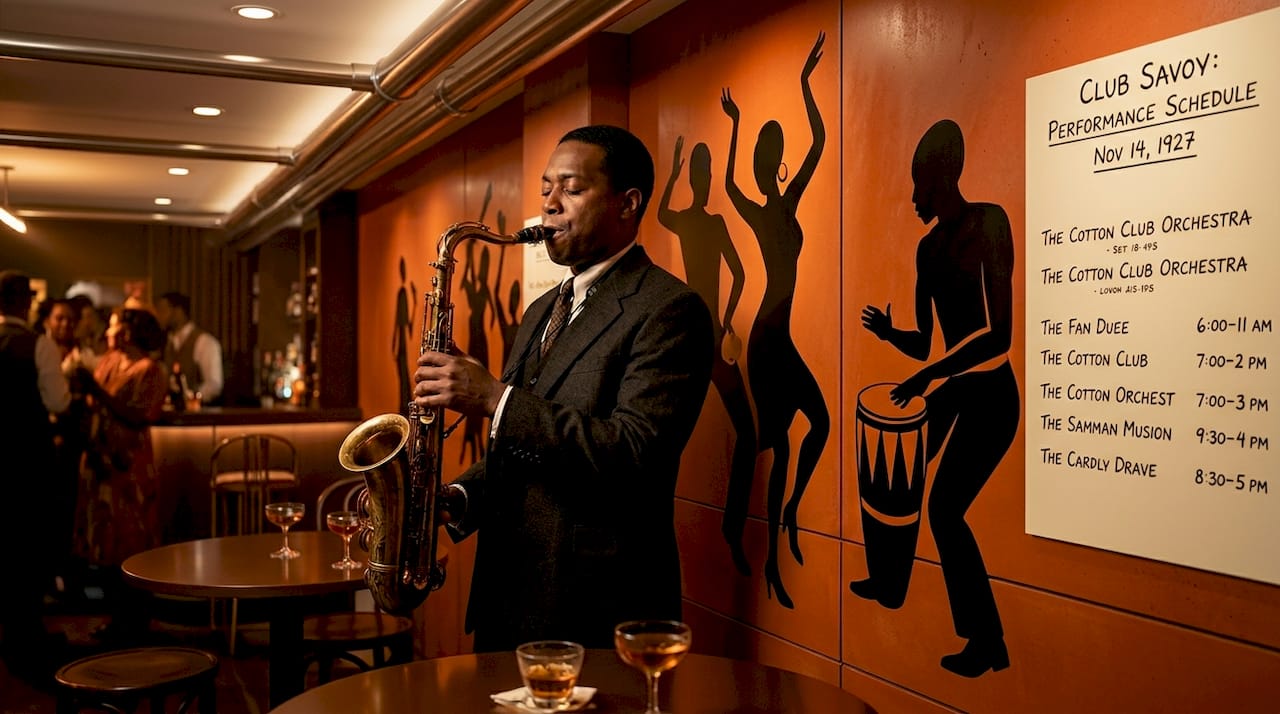
That transformation was the whole point. The impact of Harlem Renaissance art on venue culture was psychological as much as aesthetic. Murals turned temporary spaces into permanent statements. They told audiences: this music matters, this community matters, this moment is historic.
The comparison between gallery art and environmental art during this period reveals something important:
| Format | Audience | Cultural Function |
|---|---|---|
| Gallery paintings | Collectors, critics, patrons | Preserve and legitimize individual artistic vision |
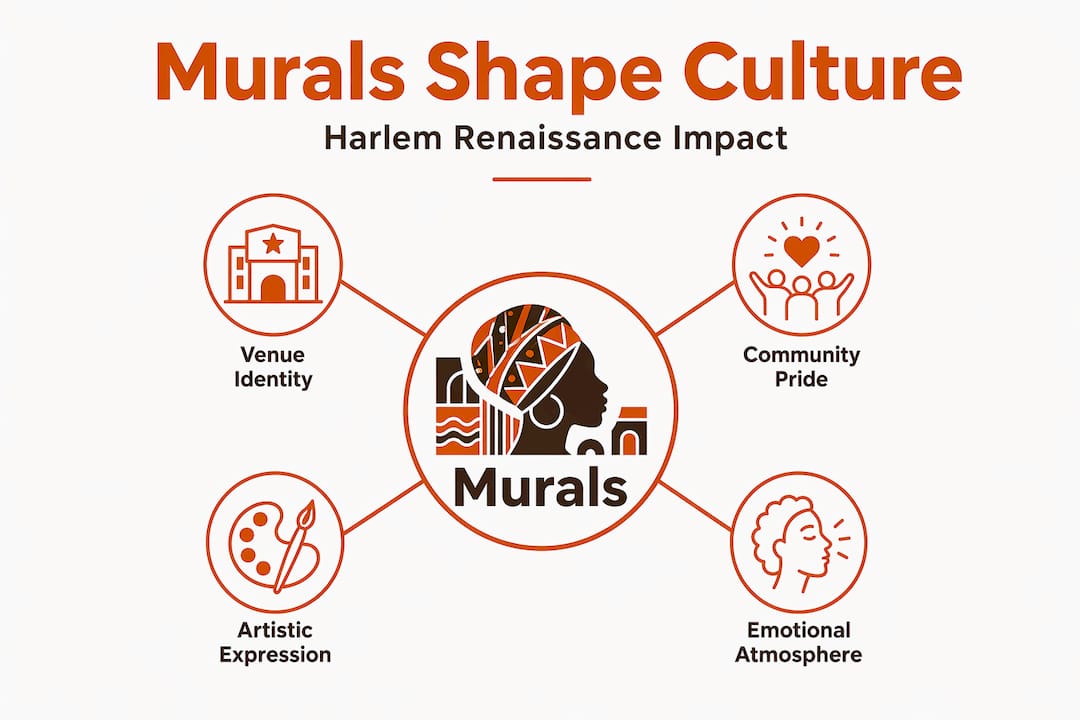
| Venue murals | Community members, nightlife audiences | Build collective identity and set emotional atmosphere |
| Stage design and placards | Theater audiences | Frame narrative, reject stereotypes, assert cultural complexity |
“The walls were not decoration. They were testimony.” This captures exactly what Harlem Renaissance muralists understood intuitively: public art is never neutral. Every brush stroke in those clubs was a declaration.
The integration of visual art with jazz and blues performance created something genuinely new. Musicians played in front of visual cosmologies. Audiences experienced music and image together in a way that amplified both. The physical space became the fourth instrument.
How media and Black institutions spread this visual culture
The Harlem Renaissance art movement did not stay inside Harlem’s clubs and theaters. It traveled through print. W.E.B. Du Bois understood that art needed infrastructure to survive, and he built that infrastructure inside The Crisis magazine. Du Bois used The Crisis as a cultural showcase and political platform simultaneously, publishing visual art alongside essays and news that gave images a radical interpretive context.
This matters for understanding the full significance of Harlem Renaissance artwork because:
- Artists gained audiences beyond their immediate geographic community
- Murals and stage designs were written about and reproduced in ways that extended their cultural life
- Media institutions became distribution hubs for visual culture, shaping how the public understood and valued environmental art
- The critical framing provided by Black-run publications gave artists leverage when dealing with white patrons and institutions
Theater also played a direct political role. The 1917 premieres of Negro Theater productions were called the most important event in African American theater history by James Weldon Johnson, precisely because they rejected blackface and minstrel stereotypes in favor of complex, dignified portrayals. Stage design was not scenery. It was a statement of intent.
Pro Tip: If you are researching the visual culture of this period, map your sources across both artistic and editorial archives. The intersection of where a mural was painted and where it was written about reveals the full network of cultural power the Harlem Renaissance built.
My perspective on environmental art and cultural memory
I have spent years studying and creating work rooted in Black cultural history, and what strikes me most about the murals and stage designs of the Harlem Renaissance is how little credit they receive compared to the paintings that ended up in galleries. That imbalance is not accidental. Art history has long favored objects that can be owned, traded, and stored. Walls cannot travel to auction houses.
What I find genuinely moving is the democratic ambition behind this environmental art. A mural in a club in Harlem was not made for collectors. It was made for a community that needed to see itself reflected in something large, permanent, and beautiful. The artists who painted those walls understood that transforming a physical space transforms the people inside it. That is a lesson worth carrying forward. Any creator working today in public art, stage design, or community spaces is operating in a tradition those artists built.
The architectural and environmental approach to art is not a lesser form of the craft. It is, in many ways, the most courageous one.
— Robert
Bring this history into your space
The environmental art of the Harlem Renaissance was never meant to stay buried in history books. At Melaninart, you can explore a curated collection of Harlem Renaissance prints that capture the silhouettes, color, and mythic power of this period, reproduced as archival museum-grade prints from original paintings by artist Robert Lawrence. If you want the atmosphere of that era on your walls, the Harlem Renaissance Quartet canvas set brings together the jazz and visual energy of the period in a format designed for modern spaces. For those drawn to the broader Afrocentric visual tradition that the Harlem Renaissance shaped, the Afrocentric art collection at Melaninart extends that conversation into contemporary Black artistry.
FAQ
What is artwork from the Harlem Renaissance?
Artwork from the Harlem Renaissance refers to the visual art produced by African American artists between roughly 1920 and 1940, including paintings, murals, stage designs, sculpture, and photography that expressed Black cultural identity and challenged racial stereotypes.
Who were the most significant Harlem Renaissance artists in stage and mural design?
Aaron Douglas was the most prominent, creating theatrical placards, murals, and stage visuals that combined Afrocentric motifs with modernist geometry. Meta Warrick Fuller, James Van Der Zee, and Richmond Barthé also made major contributions to the movement’s visual culture.
How did murals shape the Harlem Renaissance experience?
Murals transformed the physical environments of Harlem clubs and theaters, turning small venues into immersive cultural spaces that amplified the emotional impact of jazz and blues performances and reinforced community identity.
What role did The Crisis magazine play in Harlem Renaissance visual art?
W.E.B. Du Bois used The Crisis as a platform to publish and contextualize Harlem Renaissance artwork, giving visual artists a national audience and framing their work within a broader political and cultural argument for Black dignity and equality.
Where can I find authentic Harlem Renaissance art prints today?
Melaninart offers a curated selection of museum-grade Harlem Renaissance prints and canvas art, reproduced from original paintings and designed for display in home and professional spaces.