

Contemporary Black life art styles are defined as a spectrum of visual practices spanning portraiture, Afrofuturism, post-black conceptualism, and material culture, each capturing distinct facets of Black identity and experience. These are not a single movement or aesthetic. The Studio Museum in Harlem’s landmark Freestyle exhibition demonstrated this clearly, presenting 28 emerging Black artists working across painting, photography, installation, and digital media. Artists like Amy Sherald, Derrick Adams, Rashid Johnson, and Shani Crowe have each built distinct visual languages that resist easy categorization. What unites them is a shared commitment to depicting Black life in its full complexity, joy, and cultural weight.
1. Contemporary black life art styles: what they actually are
Contemporary Black life art styles are best understood as multi-media practices, not a single visual style. This distinction matters because it frees collectors and enthusiasts from expecting one unified aesthetic. Portraiture in contemporary Black art functions as an arena for complex racial representation dialogues, not simply a record of faces. The styles range from figurative oil painting to large-scale installation, from digital collage to performance. Recognizing this range is the first step toward genuinely engaging with the work.
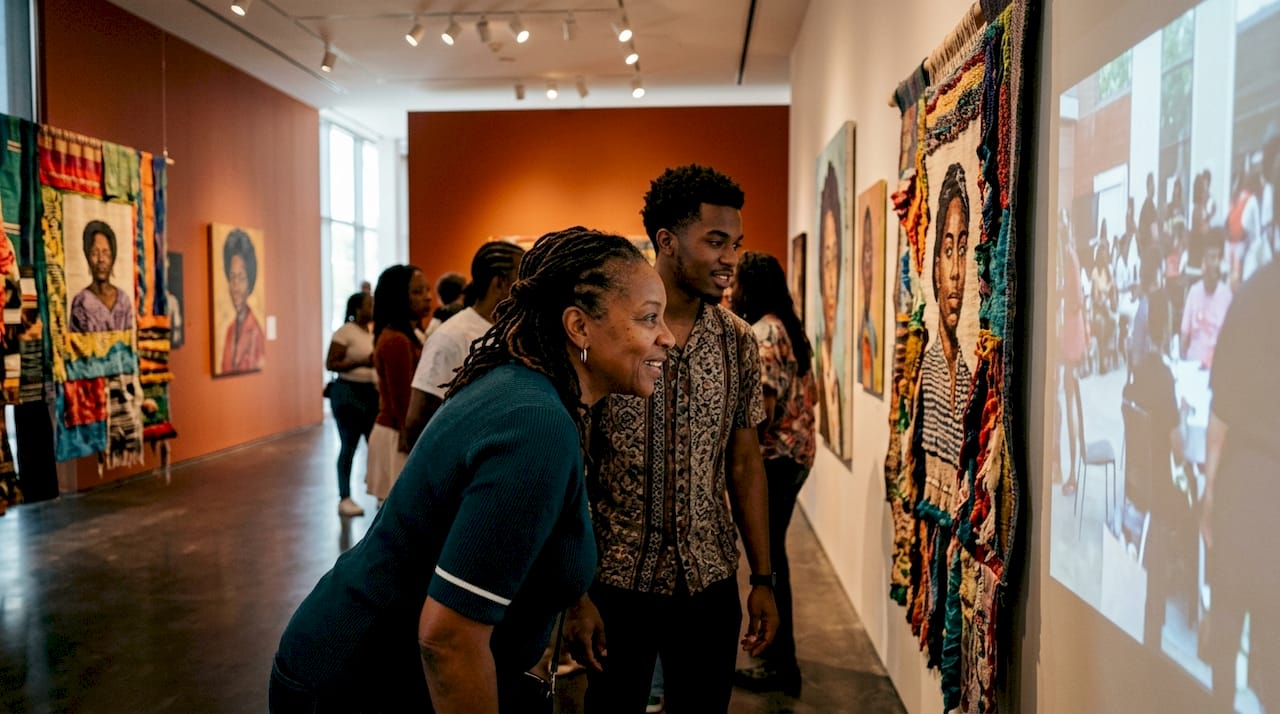
2. Portraiture as a platform for Black representation
Amy Sherald’s portraits document contemporary African American experiences, engaging debates on race and representation through both visual and conceptual means. Her subjects appear in grayscale skin tones against vivid, flat backgrounds, a deliberate choice that separates Blackness from its social context and forces viewers to reckon with identity on new terms. This approach makes portraiture a platform for debates on Black representation within American art, not simply a record of likeness.
Key characteristics of this style include:
- Intimate, arresting compositions that center the subject’s interiority
- Deliberate use of color, pattern, and scale to signal cultural belonging
- Rejection of the historical tendency to render Black subjects as background figures
Pro Tip: When viewing contemporary Black portraiture, look past the surface likeness. The color palette, posture, and setting are all deliberate arguments about identity and visibility.
3. Black joy and leisure as visual revolution
Derrick Adams centers his art on contemporary Black life with themes of joy, leisure, self-possession, and style. His Floater series depicts Black subjects resting on pool floats, surrounded by vivid color and summer ease. This is not decoration. Leisure imagery in Black art functions as a political statement countering histories of violence, treating Black repose as a deliberate visual act of revolution.
The most important moves in this style are:
- Centering rest and pleasure as subjects worthy of serious artistic attention
- Using popular culture references, bright color, and pattern as a visual vocabulary
- Treating everyday self-possession as a form of cultural resistance
“Black joy in contemporary art is not simply celebration. It is a strategic, critical visual language that reclaims space and rewrites historical narratives.”
Artists working in this mode use popular culture and media circulation channels as serious visual materials, depicting Black life in all its vibrancy and complexity. The result is work that reads as celebratory on the surface and politically charged underneath.
4. Post-black art and the rejection of reductive labels
Thelma Golden defined post-black art as work by artists deeply engaged with Blackness but rejecting reductive labeling. The concept, which Golden developed in connection with the Studio Museum in Harlem, describes art that embraces dichotomies of high and low, inside and outside, tradition and innovation. Post-black art resists single-style classification and insists on a plurality of forms to represent Black identities.
| Traditional Black art framing | Post-black art approach |
|---|---|
| Single unified aesthetic expected | Diverse media and styles embraced |
| Race as primary subject | Race as one of many complex themes |
| Historical narrative focus | Contemporary and speculative themes included |
| Institutional gatekeeping | Resistance to reductive labeling |
Pro Tip: Post-black art is not a rejection of Blackness. It is a refusal to let Blackness be reduced to a single story. Collect and display it with that complexity in mind.
5. Afrofuturism and speculative Black visual culture
Afrofuturism is a cultural and artistic framework that connects African diasporic identity to speculative futures, science fiction aesthetics, and cultural memory. Rashid Johnson’s work blends conceptualism and abstract traditions, using culturally significant materials like shea butter and black soap as bridges to cultural memory. His art places Black experience at the intersection of the past and an imagined future, which is the defining move of Afrofuturist visual practice.
Key visual and conceptual features of Afrofuturism in contemporary art include:
- Use of cosmic imagery, metallic surfaces, and non-linear time references
- Incorporation of culturally specific materials that carry historical weight
- Speculative narratives that center Black agency in imagined futures
- Blending of African visual traditions with technology-influenced aesthetics
Afrofuturism has moved well beyond music and literature. Collectors seeking Afrofuturism art prints will find a growing market of work that is both visually striking and conceptually rich.
6. Interdisciplinary and material culture approaches
Shani Crowe’s interdisciplinary art uses cultural coiffure, adornment, and beauty rituals in mixed media to explore diasporic identity. Her exhibitions feature large-scale yarn tapestry, beading, and performance, all focused on hair textures and ornaments as carriers of cultural meaning. Hair, in this context, is not a decorative subject. It is a record of diasporic history, resistance, and identity.
| Artist | Medium | Cultural focus |
|---|---|---|
| Shani Crowe | Yarn tapestry, beading, performance | Hair, adornment, diasporic identity |
| Rashid Johnson | Shea butter, black soap, tile | Cultural memory, Afrofuturism |
| Derrick Adams | Collage, painting, mixed media | Leisure, Black joy, popular culture |
| Amy Sherald | Oil on canvas | Portraiture, racial representation |
This material approach connects abstract art forms to lived cultural experience in ways that purely formal painting cannot. The physical substance of the work carries meaning before the viewer even reads the image.
Key takeaways
Contemporary Black life art styles are most powerful when understood as a diverse, multi-media spectrum rather than a single aesthetic, with each style making distinct arguments about identity, joy, and cultural memory.
| Point | Details |
|---|---|
| Portraiture as argument | Amy Sherald uses color and composition to challenge how Black identity is seen in American art. |
| Joy as political act | Derrick Adams’ leisure imagery is a deliberate counter-narrative to histories of Black suffering. |
| Post-black plurality | Thelma Golden’s framework frees artists from reductive racial labeling while centering Black identity. |
| Afrofuturism’s reach | Rashid Johnson connects cultural materials to speculative futures, expanding what Black art can imagine. |
| Material culture matters | Shani Crowe proves that medium itself carries cultural memory and diasporic meaning. |
Why I think the joy question is the most misunderstood
Most conversations about contemporary Black art default immediately to pain, protest, and historical trauma. Those themes are real and they matter. But after years of studying and collecting work in this space, I am convinced that the most radical and least understood move in contemporary Black life art is the insistence on joy as a serious subject.
Derrick Adams’ Floater series gets dismissed in some circles as decorative or light. That reading misses the point entirely. Depicting Black people at rest, in pleasure, unbothered by the weight of history, is a harder artistic argument to make than depicting suffering. Suffering confirms what the dominant culture already expects. Joy refuses that expectation. It demands that viewers reckon with Black humanity on its own terms, not as a response to violence.
The artists doing this work, Adams, Sherald, and the emerging voices coming through the Studio Museum in Harlem’s residency program, are building a visual archive of Black life that future generations will look back on as one of the most significant cultural contributions of this era. Collecting it now is not just an aesthetic choice. It is a form of cultural participation.
— Robert
Bring these styles into your space with Melaninart
Melaninart offers museum-grade prints that bring the full range of contemporary Black life art styles into your home. The Afrocentric art collection covers portraiture, cultural heritage, and community themes, while the Afrofuturism collection delivers speculative, visually striking pieces rooted in Black cultural memory. For collectors drawn to historical movements, the Harlem Renaissance Quartet prints connect contemporary display to one of the most important chapters in African American art history. Every piece is reproduced from original oil or watercolor paintings by artist Robert Lawrence, with customizable framing and sizing to fit any space.
FAQ
What is contemporary Black life art?
Contemporary Black life art is a broad category of visual practices by Black artists depicting Black identity, culture, and experience across diverse media including painting, photography, installation, and mixed media. The Studio Museum in Harlem’s Freestyle exhibition is one of the defining showcases of this field.
Who are the leading artists in this style?
Amy Sherald, Derrick Adams, Rashid Johnson, and Shani Crowe are among the most recognized names in contemporary Black life art, each working in distinct styles from portraiture to Afrofuturism to material culture.
What is post-black art?
Post-black art, a term defined by curator Thelma Golden, describes work by artists deeply engaged with Blackness who reject reductive racial labeling, embracing a wide range of media, themes, and conceptual approaches instead.
How does Afrofuturism differ from other Black art styles?
Afrofuturism centers speculative futures, cultural memory, and science fiction aesthetics, placing Black identity at the intersection of history and imagination. Artists like Rashid Johnson use culturally specific materials to ground this speculative vision in lived experience.
How do I start collecting contemporary Black art?
Start by identifying which style resonates most, whether portraiture, Afrofuturism, or material culture, then explore platforms like Melaninart for archival-quality prints that bring these styles into your home without requiring gallery access.