

Afrocentric art is one of the most meaningful categories in contemporary collecting, yet it’s also one of the most misunderstood. Many collectors walk into galleries or browse online and assume any art depicting African imagery qualifies. It doesn’t. Afrocentric art is a specific, intentional creative practice that centers Black identity, African heritage, and the lived experiences of the diaspora. Whether you’re building a collection from scratch or looking to add depth to your existing space, understanding what Afrocentric art truly is will sharpen your eye and deepen your connection to every piece you bring home.
Table of Contents
- What does Afrocentric mean in art?
- Afrocentric art vs traditional African art
- Why Afrocentric art matters for collectors
- How to display Afrocentric art in your space
- The deeper value of Afrocentric art: what most collectors miss
- Elevate your collection with authentic Afrocentric art
- Frequently asked questions
Key Takeaways
| Point | Details |
|---|---|
| Afrocentric celebrates identity | Afrocentric art focuses on Black experiences and African agency, not just heritage motifs. |
| Value authenticity and provenance | Works with a clear origin or exhibition record offer stronger resale and cultural impact. |
| Empowers collectors | Collecting Afrocentric art connects you to history, pride, and a stable global art market. |
| Curate with intention | Display Afrocentric art where it tells your story and sparks meaningful conversations at home or work. |
What does Afrocentric mean in art?
The word “Afrocentric” carries real intellectual weight. As a framework, Afrocentricity centers African culture, history, and agency specifically to counter the Eurocentric narratives that have dominated Western art history for centuries. In practical terms, Afrocentric art doesn’t just depict Black faces or African patterns. It actively positions Black identity as the subject, the lens, and the point of pride.
This is a crucial distinction. Eurocentric art has historically placed African people and culture at the margins, or worse, reduced them to exotic backdrops. Afrocentric art reverses that entirely. The community is the hero. The ancestor is honored. The everyday moment of a Black family, a neighborhood, a woman in her natural hair, becomes worthy of museum-grade canvas.
Key characteristics of Afrocentric art include:
- Subjects that center Black people in dignified, powerful, and joyful contexts
- Themes of heritage, identity, and community drawn from African and diaspora experiences
- Visual styles that blend contemporary techniques with African aesthetic traditions
- Intentional storytelling that challenges historical erasure and celebrates cultural continuity
- Emotional resonance with the lived experiences of Black people across generations
Explore Afrocentric canvas art options to see how these themes translate into gallery-quality prints for your home.
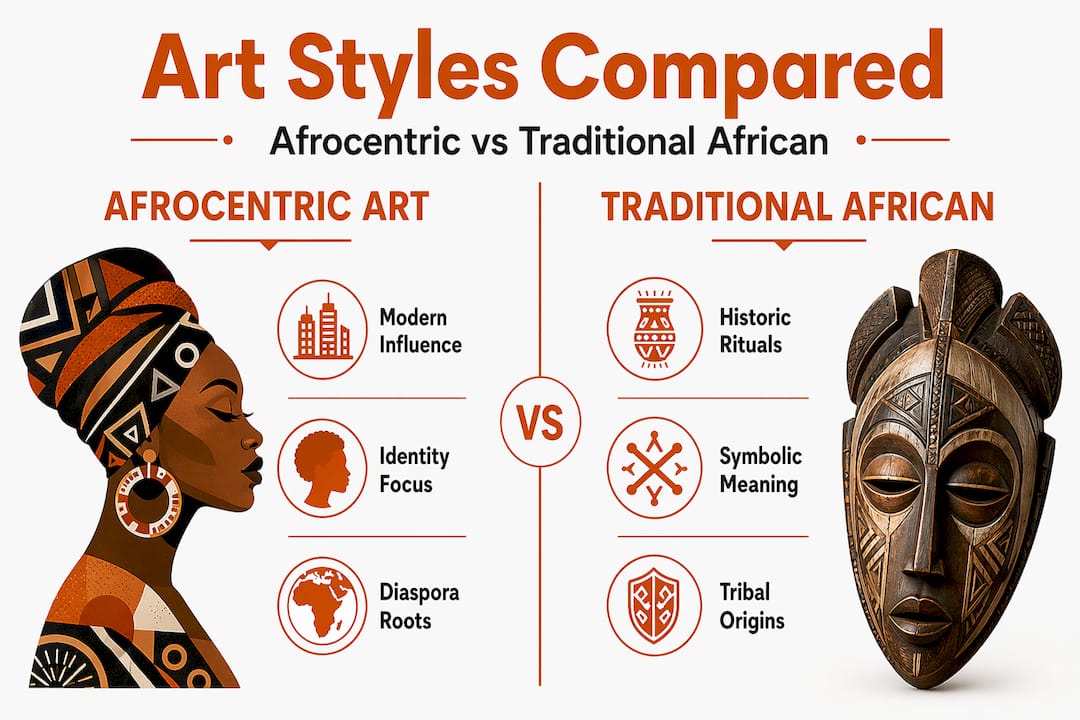
Afrocentric art vs traditional African art
With the basic definition in place, it’s vital to understand how Afrocentric art compares to traditional African art. Many collectors conflate the two, and that confusion can lead to costly mistakes or missed opportunities.
Traditional African art refers to objects created within specific cultural, ritual, or tribal contexts across the African continent. Think ceremonial masks, ancestral sculptures, and woven textiles tied to particular communities and spiritual practices. These works were made for function within a culture, not primarily for display in a Western living room.
Afrocentric art, by contrast, is contemporary in nature. It’s created by modern artists who draw on African heritage to speak to present-day Black identity and experience. The purpose shifts from ritual to representation, from tribal function to personal and collective empowerment.

| Feature | Afrocentric art | Traditional African art |
|---|---|---|
| Origins | Contemporary, diaspora-focused | Specific African cultural/tribal traditions |
| Purpose | Identity, empowerment, representation | Ritual, ceremony, ancestral function |
| Themes | Modern Black life, heritage, community | Spiritual practice, tribal history |
| Collectible value | Growing, driven by diaspora demand | Established, but provenance-sensitive |
| Common pitfall | Misidentifying generic African imagery | Buying artificially aged fakes with uneven patina or machine marks |
When it comes to traditional African art, provenance matters enormously. Fakes are common, and they often show telltale signs: uneven patina, machine-made marks, or a complete absence of documented history. For Afrocentric contemporary works, the risk shifts toward buying generic or mass-produced prints marketed as culturally significant.
Red flags to watch for when buying either category:
- No documentation of the artist’s background or creative process
- Vague or missing exhibition history
- Machine marks or uniform aging on supposedly handcrafted pieces
- Prices that seem too low for the claimed quality or rarity
- No clear connection between the artwork’s themes and authentic cultural narratives
Pro Tip: For both traditional and Afrocentric works, ask for institutional or exhibition history before purchasing. A piece shown in a gallery or featured in a curated collection carries stronger provenance and better long-term value.
Browse pieces like African tribal elder wall art or modern Afrocentric wall art to see how authentic contemporary works handle these themes with intention and craft.
Why Afrocentric art matters for collectors
Once you can spot true Afrocentric works, it’s important to know why they’re increasingly sought after by collectors. This isn’t a passing trend. The demand is structural, emotional, and growing.
Collectors are drawn to Afrocentric art for several compelling reasons:
- Personal connection: For many Black collectors and allies, these works reflect lived experience in a way that mainstream art rarely does
- Cultural pride: Owning a piece that celebrates Black heritage is an act of affirmation and visibility
- Market stability: The African and Afrocentric art market has shown stability amid global contraction, even as other segments pulled back
- Diaspora demand: Collectors across the African diaspora are actively driving demand through cultural reconnection, creating a sustained buyer base
- Narrative depth: Each piece carries a story that extends beyond aesthetics into history, resistance, and celebration
It’s worth noting that Afrocentrism as a philosophy has both passionate advocates and thoughtful critics. Supporters argue it restores dignity and historical accuracy to Black communities. Critics suggest it can sometimes overemphasize African achievements in ways that minimize complex historical interactions. As a collector, engaging with that nuance actually deepens your appreciation. You’re not just buying decor. You’re participating in an ongoing cultural conversation.
“The most meaningful collections are built not just on taste, but on understanding. When you know why a work exists, you see it differently every time you look at it.”
Provenance and exhibition history remain the strongest signals of lasting value. A piece with a documented artist story, a gallery showing, or institutional recognition will hold its significance far longer than something purchased without context. Vibrant works like colorful Afrocentric wall art that come with clear artist backgrounds offer exactly that kind of grounded, lasting appeal.
How to display Afrocentric art in your space
With the cultural and market context established, let’s get practical about how to style your space with Afrocentric art. The goal isn’t just decoration. It’s creating an environment that reflects who you are and what you value.
Here are effective ways to style different spaces:
- Living room: Use a large statement canvas as a focal point above the sofa. Pair it with warm, earthy tones to let the artwork breathe and draw the eye
- Home office: Choose pieces with themes of strength, ambition, or community. Art that speaks to purpose can genuinely shift your mindset during the workday
- Entryway: Make a bold first impression with a single striking piece that sets the cultural tone for your entire home
- Bedroom: Opt for softer, more intimate themes. Portraits of Black women, family scenes, or nature-inspired Afrocentric works create warmth without overwhelming the space
| Setting | Recommended theme | Art style |
|---|---|---|
| Modern workspace | Ambition, leadership, urban life | Bold lines, contemporary palette |
| Heritage home | Ancestry, community, tradition | Rich textures, warm tones |
| Minimalist apartment | Identity, natural beauty | Clean composition, statement color |
| Creative studio | Cultural celebration, movement | Layered, expressive, vibrant |
Pro Tip: Mix one large statement canvas with two or three smaller themed prints to create a curated gallery wall effect. Vary the sizes but keep the cultural thread consistent so the collection feels intentional, not random.
Art rooted in Afrocentricity as an intellectual framework naturally sparks conversation. When guests ask about a piece, you have a story to tell. That’s the real power of thoughtful collecting. Pieces like urban Black aesthetic wall art or African mosaic wall art bring that kind of layered meaning into everyday spaces beautifully.
The deeper value of Afrocentric art: what most collectors miss
Most collectors, especially those just starting out, focus on two things: does it look good, and will it hold value? Both are reasonable questions. But they miss something that longtime collectors know well. The pieces that stay meaningful are the ones that keep giving you something new.
Afrocentric art does this in a way that purely decorative work simply can’t. A portrait of a Black elder doesn’t just fill wall space. It holds a generation. A painting of children playing in a community setting doesn’t just add color to a room. It affirms belonging. That ongoing dialogue between the art and your life is what makes a collection feel alive rather than static.
We’ve seen collectors who initially bought for aesthetics come back years later and say the same thing: the piece they thought was just beautiful turned out to be the one they couldn’t imagine living without. That’s not coincidence. That’s what happens when art is rooted in real human experience.
The criticism that Afrocentric art is “niche” or “trend-driven” misses the point entirely. Identity is not a trend. Heritage is not a phase. The demand for art that reflects Black life with honesty and beauty is not going away because it was never just about what’s fashionable. It’s about what’s true.
Pro Tip: When choosing a piece, ask yourself whether it sparks a question or a memory. Art that makes you think about history, hope, or your own story will reward you for years. Works like textured African American art are built with exactly that kind of depth in mind.
Elevate your collection with authentic Afrocentric art
Ready to start or elevate your own Afrocentric art journey? Melanin Art offers a curated collection of museum-grade archival prints, each reproduced from original oil and watercolor paintings by artist Robert Lawrence. Every piece is created with the intention of celebrating Black culture, heritage, and identity at the highest quality level. You’re not buying a generic print. You’re bringing home an original artistic vision, rendered with archival precision and cultural authenticity.
Browse the full Afrocentric canvas art collection to find pieces that speak to your story, or explore standout options like modern Afrocentric office art for spaces where culture and purpose meet. Customizable sizing and framing options make it easy to find the perfect fit for any room.
Frequently asked questions
How can I authenticate Afrocentric art before buying?
Look for documented artist backgrounds, exhibition history, and clear provenance. Artificial aging fakes often show uneven patina and machine marks, so always ask for the piece’s full story before purchasing.
What makes Afrocentric art unique compared to Pan-African or traditional African art?
Afrocentric art centers contemporary Black identity and lived experience, while traditional African art is rooted in ritual, tribal, or ancestral functions. As a framework, Afrocentricity centers African agency as a direct counter to Eurocentric narratives.
Is Afrocentric art a good investment?
Yes, particularly when you prioritize provenance and artist credibility. The market shows stability even amid broader contractions, and diaspora collectors driving demand create a sustained, growing buyer base for authentic works.
Can I mix Afrocentric pieces with other styles in my home?
Absolutely. Afrocentric art works beautifully as a statement anchor in a neutral space, as part of a mixed gallery wall, or as a bold complement to contemporary or traditional interiors. The cultural depth of the work adds meaning to any setting.