

Bold, expressive, and full of cultural meaning, African wall art has moved well beyond safari-themed rooms and into some of the most sophisticated interiors around. The challenge most homeowners face is not finding a piece they love. It is making it feel intentional rather than rustic or out of place. These seven styling approaches will show you how to work bold colors, geometric patterns, and handcrafted textures into minimalist, mid-century modern, and industrial spaces without losing the cultural depth that makes the art worth owning.
Table of Contents
- Key takeaways
- 1. Understanding what makes African wall art work in modern spaces
- 2. Let one strong statement piece do all the work
- 3. Use African textiles as wall art alternatives
- 4. Pair African art with minimalist and industrial decor
- 5. Build a curated gallery cluster without the clutter
- 6. Match cultural motifs to your existing color story
- 7. Source art that carries authentic cultural meaning
- My take on why this styling approach actually matters
- Bring authentic African wall art into your modern interior
- FAQ
Key takeaways
| Point | Details |
|---|---|
| Limit pieces for impact | Displaying 1 to 3 pieces per wall preserves a curated, sophisticated feel rather than a themed display. |
| Match art energy to room | High-energy tribal art suits living rooms; softer portraits and earthy tones work best in bedrooms. |
| Textiles add what prints cannot | Mudcloth and handwoven fabrics bring tactile depth and authenticity that elevate modern spaces. |
| Lighting unifies the display | Directional or accent lighting transforms art into a quiet focal point without cluttering the wall. |
| Framing is part of the design | Subtle, neutral frames keep the focus on the artwork and prevent it from feeling decorative or costume-like. |
1. Understanding what makes African wall art work in modern spaces
Before you hang a single piece, it helps to understand why some African art reads as intentional in a modern room and why other pieces read as out of place. The answer almost always comes down to context, not the art itself.
Here are the core guidelines to carry through every styling decision:
- Limit your display. Keeping art to one to three pieces per wall avoids the themed-room trap. As research on display curation notes, overcrowding creates a display rather than a thoughtful narrative.
- Choose your background deliberately. White, warm gray, and greige walls let color-rich canvases breathe. Busy wallpaper competes with the art.
- Match the energy of the piece to the room. Experts recommend placing high-energy tribal art in living rooms and reserving calm portraits or earthy tones for bedrooms.
- Select frames that disappear. Thin black, natural wood, or matte gold frames keep attention on the artwork, not the border.
- Use lighting with purpose. A picture light or adjustable track spot turns art into a quiet presence rather than decor that fades into the wall.
Pro Tip: Color matters more than theme. Gold tones read as luxurious, red as vital and energetic, and earth tones as grounding. Choose pieces where the color palette aligns with what you want the room to feel like.
2. Let one strong statement piece do all the work
The easiest way to honor bold African art in a modern space is to let a single large piece lead the room. One well-chosen canvas communicates more than four competing prints ever will.
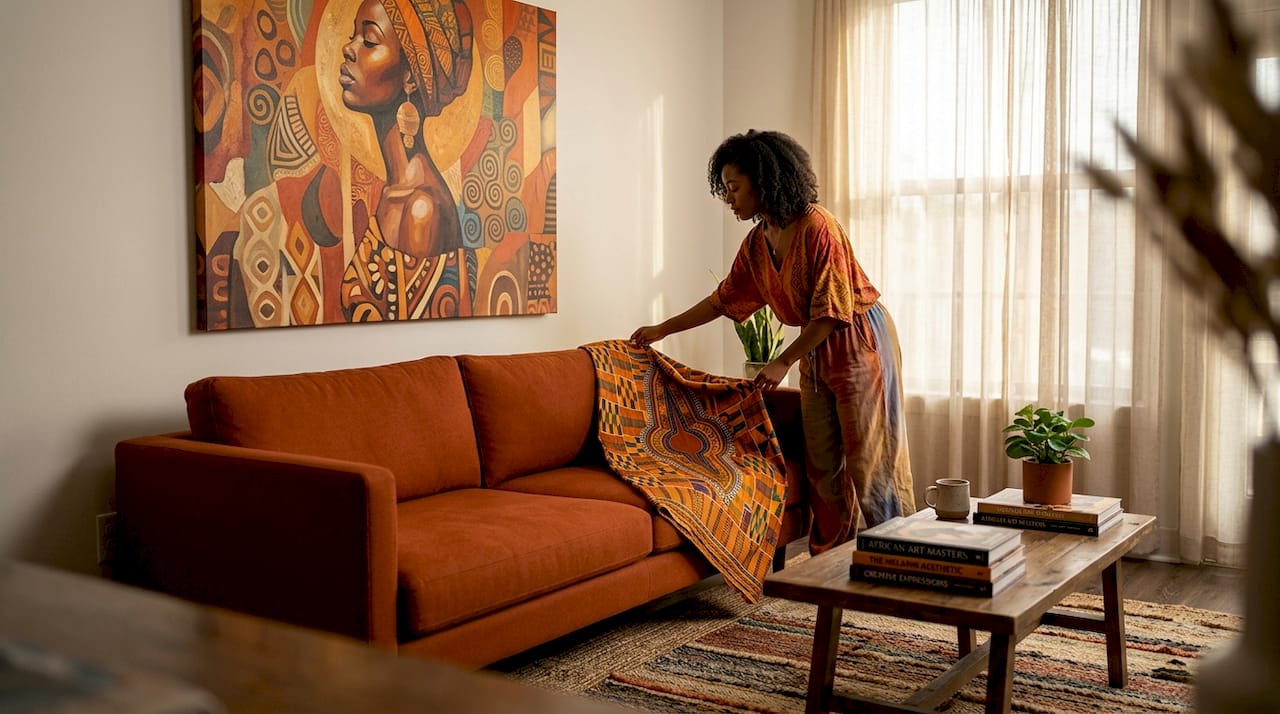
For this approach, scale is your friend. A canvas measuring 24 by 36 inches or larger placed above a sofa, console, or bed anchors the entire room. Pieces from Melaninart’s collection like the modern tribal canvas art carry the kind of presence that works at that scale without overwhelming a clean, modern layout.
Keep surrounding furniture simple. A cream linen sofa, a raw wood coffee table, or a matte black console all let the art stay in charge. The art is more than decoration. It carries cultural language, and giving it space is a form of respect.
Pro Tip: Position the center of the canvas 57 to 60 inches from the floor. This is the standard gallery hang height and naturally draws the eye at standing and seated levels.
3. Use African textiles as wall art alternatives
Prints are not the only option. Framed or mounted African textiles bring something oil on canvas simply cannot replicate: physical texture. Handwoven African textiles add tactile dimension and authenticity that elevate modern interiors in a way flat prints do not.
| Textile type | Visual character | Best pairing |
|---|---|---|
| Mudcloth (Bogolan) | Geometric, earthy, graphic | Industrial lofts, neutral interiors |
| Kente cloth | Bright, structured, celebratory | Mid-century modern, warm-toned rooms |
| Kuba fabric | Layered pattern, rich texture | Minimalist spaces needing warmth |
To hang textiles cleanly, stretch them over a wooden frame the way a canvas is stretched, or use a simple dowel rod mount. Both methods keep the look modern and intentional. Textiles also pair naturally with metal, glass, and concrete surfaces because the softness of the weave creates contrast rather than conflict.
4. Pair African art with minimalist and industrial decor
African art and minimalist interiors are a natural match. African art complements modern interiors by adding warmth and cultural depth to clean lines and neutral palettes, creating a hybrid aesthetic where boldness and simplicity reinforce each other.
The keys to making this work:
- Choose pieces with strong geometric structure. Abstract and mosaic-style art like the tribal mosaic canvas echoes the angular lines found in industrial and minimalist rooms.
- Keep the surrounding space intentionally bare. Open wall space is not wasted; it is breathing room that increases the visual weight of the art.
- Avoid clustering multiple culturally specific objects together. A single framed African canvas next to a concrete lamp and a leather chair reads as curated. The same canvas surrounded by masks, statues, and tribal throws reads as a theme park.
- Scale up rather than down. Small pieces get lost against large bare walls. One large-format print beats three small ones in a contemporary setting.
Contemporary abstract African art frequently carries social and political meaning beyond surface aesthetics. Artists like Odili Donald Odita use geometric ribbons of color to embed cultural significance, which means a “decorative” piece in your living room may be carrying a conversation you have not had yet.
5. Build a curated gallery cluster without the clutter
Gallery walls get a bad reputation in African art styling because people overdo them. The fix is not avoiding clusters entirely. It is being ruthless about restraint.
Follow this approach:
- Limit the cluster to two or three pieces maximum. Grouping too many pieces together results in a themed display that undermines a sophisticated aesthetic.
- Mix one large piece with one or two smaller works in different media. A large canvas paired with a small framed textile creates dynamic visual interest without noise.
- Leave visible space between frames. Six to eight inches of breathing room between pieces is a minimum. More space reads as gallery-quality.
- Keep framing consistent. If you use black frames, use black frames throughout. Mixed frame styles in small clusters create visual chaos.
Pro Tip: Before putting a single nail in the wall, cut paper templates of each piece and tape them up. Live with the arrangement for a day before committing. What looks right in theory often needs adjustment once you see it at scale.
6. Match cultural motifs to your existing color story
African art collections span a wide range of colors, from rich burgundy and saffron to cool indigo and ivory. The mistake most people make is choosing a piece for the motif and ignoring whether the palette works with the room.
Color psychology in this context is practical rather than abstract. Gold conveys luxury, red shows vitality, and earth tones bring calm grounding. A piece with deep burgundy and gold will feel entirely different on a warm white wall versus a cool gray one.
Look at the dominant color in your furniture, rugs, and textiles first. Then find art that either repeats one of those tones or introduces a deliberate contrast. Contrast works when there is a clear logic to it. Repetition works when you want the room to feel cohesive and intentional. Both are valid. Accidental is not.
7. Source art that carries authentic cultural meaning
Styling decisions matter far less than the piece you start with. Sourcing directly from artisans or culturally focused galleries ensures authenticity. Authentic pieces carry symbolic meaning beyond what mass-produced decorative art can offer, and that meaning is exactly what elevates a room from decorated to significant.
When evaluating a piece, ask what tradition or region it draws from, who made or designed it, and whether the cultural motifs are interpreted with care or just borrowed for visual effect. Art celebrating specific cultural identities through bold patterns and abstract interpretations communicates narrative, symbolism, and emotional warmth that generic safari prints simply do not.
My take on why this styling approach actually matters
I have been creating and placing African art in homes long enough to notice a pattern. The clients who get it right are not the ones who collect the most pieces. They are the ones who treat each piece as a story worth telling.
What I have seen go wrong repeatedly is the “theme room” instinct. People fall in love with the idea of an African-inspired space and start stacking. By the time they are done, every surface carries a cultural marker and nothing actually stands out. The pieces undercut each other.
What I believe about this, after years of working with clients on culturally meaningful decor, is that restraint is a form of respect. When you give one piece room to breathe on a clean white wall with a single spot of warm light on it, you are not minimizing the culture. You are honoring it. You are saying this story is worth pausing for.
Modern homes have a real opportunity to carry African heritage forward without flattening it into decoration. That opportunity is lost the moment art becomes wallpaper.
— Robert
Bring authentic African wall art into your modern interior
Melaninart was built specifically to give collectors and homeowners access to gallery-quality, culturally grounded African art that belongs in a modern interior. Every piece in the Afrocentric art collection comes from original oil and watercolor paintings, reproduced as museum-grade archival prints that hold color and detail for decades. Whether you are building a single statement wall or a carefully curated cluster, you will find pieces spanning modern tribal, geometric mosaic, abstract, and portrait styles. The African wall art collection includes customizable sizing and framing options so the art fits your specific wall and color story from the start.
FAQ
What is the best way to hang African wall art in a modern room?
Choose a neutral background wall, hang the piece at 57 to 60 inches from the floor to center, and use directional lighting to draw focus. Keep surrounding furniture simple so the art remains the visual anchor.
How many African art pieces should I display together?
Limit grouped displays to one to three intentional pieces. More than three pieces in close proximity typically creates a themed display rather than a curated, sophisticated arrangement.
Can African textiles work as wall art in a contemporary space?
Yes. Mudcloth, kente cloth, and kuba fabric stretched over a wooden frame or mounted on a dowel rod add tactile depth and authenticity that flat prints cannot replicate, and they pair naturally with metal and concrete surfaces.
How do I pick African wall art that fits my existing color palette?
Start with your room’s dominant tones in furniture and rugs, then find art that repeats one of those tones or introduces a deliberate, logical contrast. Gold reads as luxurious, earth tones as grounding, and red as energetic.
Does African wall art work in minimalist interiors?
It works particularly well. Minimalist environments spotlight African art by giving pieces room to breathe and highlighting color and texture contrast against simple surroundings.