

Your living room should do more than look good. It should tell the world exactly who you are, where you come from, and what you value. For Black homeowners and renters, Afrocentric decor isn’t a trend to follow or a seasonal palette to swap out. It’s a deliberate act of cultural pride that weaves together centuries of artistry, heritage, and identity into everyday spaces. But blending bold Kente-inspired patterns with grounded earthy tones, and doing it without the room feeling chaotic, is a real challenge. This guide breaks it all down into actionable steps so you can build a living room that feels as powerful as it looks.
Table of Contents
- How to set an Afrocentric foundation: Color, texture, and balance
- Making a statement: Choosing Afrocentric wall art and focal accents
- Layering textiles and patterns for visual depth
- Texture, function, and authenticity: Adding natural materials
- Cultural storytelling: Sourcing authentic, story-driven art and objects
- Why meaning matters more than matching: The art of Afrocentric living rooms
- Transform your living room with Afrocentric art
- Frequently asked questions
Key Takeaways
| Point | Details |
|---|---|
| Grounded color base | Start with earthy neutrals for a balanced Afrocentric living room. |
| Statement wall art | Anchor your space with bold, culturally meaningful artwork or textiles. |
| Layered patterns | Mix hero and supporting prints with solid textures for visual depth. |
| Natural materials | Add woven and tactile elements like jute, basketry, and carved wood. |
| Authenticity matters | Choose decor that shares real stories and supports Black artists. |
How to set an Afrocentric foundation: Color, texture, and balance
Now that you know what this guide covers, let’s start by setting the right design foundation.
Every intentional Afrocentric space starts with a grounded neutral base. Think warm off-whites, deep browns, rich ochre, and sun-baked earthy tones. These anchors give the room breathing room so that bold colors and patterns don’t compete for attention. Afrocentric living rooms typically build from this grounded neutral base and then add vibrant cultural accents through textiles, artwork, and natural textures. The neutral foundation is what makes the statement pieces actually sing.
“Balance is not about holding back. It’s about knowing where to let bold elements lead so the rest of the room can follow.”
Once the base is set, layering is where the magic happens. Consider these key texture elements:
- Mudcloth pillows: Bring in black-and-white geometric energy that feels both modern and ancestral
- Woven baskets: Group them on walls or stack them on shelves as functional sculpture
- Jute or sisal rugs: Ground the seating area with natural warmth underfoot
- Ankara-print throw blankets: Add a pop of color draped over a neutral sofa
- Carved wood side tables: Introduce raw, tactile materials that reference West African craftsmanship
From there, explore modern Afrocentric wall art as a way to carry vibrant color into the vertical space of the room.
Pro Tip: If you’re new to mixing patterns, start with one bold statement piece and then echo its dominant colors through smaller textiles and accents. This keeps the room cohesive without feeling like a catalog page.
Making a statement: Choosing Afrocentric wall art and focal accents
With a foundation set, the next step is to establish a focal point with artwork that celebrates culture.
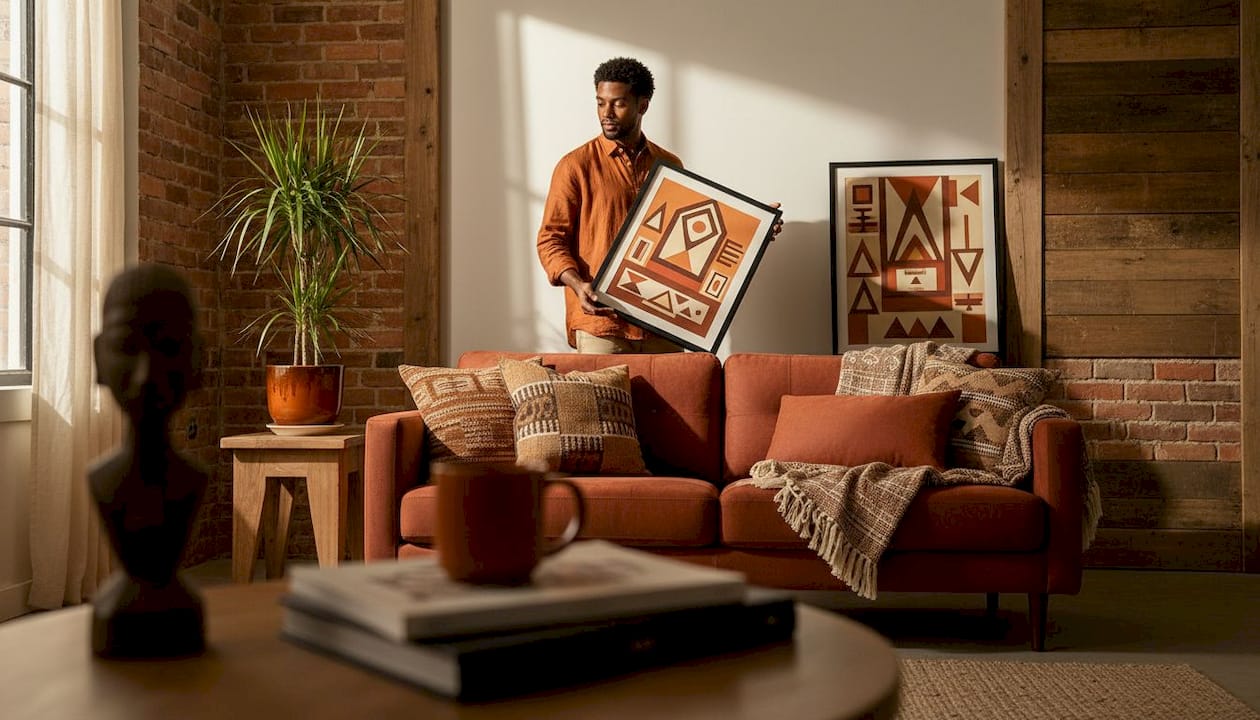
Wall art is the heartbeat of an Afrocentric living room. Oversized statement wall art, including bold, pattern-rich textiles framed as art, is a key mechanism for creating visual impact. One large piece does more work than five small prints scattered without intention.
Here’s how to choose your statement piece with purpose:
- Identify your story. Does the art reflect African heritage, the African American experience, community, joy, or resistance? Pick a theme that connects to your own narrative.
- Go large. A piece that spans at least 24 by 36 inches commands attention and anchors the entire room around it.
- Consider framing a textile. Kuba cloth or mudcloth stretched over a canvas frame or placed in a deep-set gallery frame creates immediate cultural impact without being decorative-art predictable.
- Echo the palette. Once your hero piece is chosen, pull its two or three dominant colors into pillows, throws, and smaller accent objects.
- Layer with ancestors canvas wall art to bring in figurative storytelling that honors elders and roots.
The goal is a living room where someone walks in and immediately feels something. That emotional response comes from art that was chosen with intention, not just because it matched the couch.
Pro Tip: Position your statement piece at eye level on the wall directly across from the entry point of the room. That’s the first thing guests and you will see every day, so make it count.
Layering textiles and patterns for visual depth
With art as your anchor, it’s time to add life and meaning through textiles and layered patterns.
Layering patterns is a skill, and it follows a simple rule: one hero print, one supporting print, and one solid or textured neutral. The textiles commonly used for Afrocentric decor include mudcloth with black-and-white geometric patterns, Kuba cloth with graphic geometry, Kente-inspired stripes, and wax print or Ankara-inspired patterns. Each one has a different visual weight.
Here’s a quick comparison to guide your choices:
| Layer | Pattern type | Visual impact | Best use |
|---|---|---|---|
| Hero print | Bold, complex, colorful | High | Large pillow, throw, framed textile |
| Supporting print | Medium scale, complementary | Medium | Accent pillow, smaller rug, ottoman cover |
| Texture or solid | No pattern, tactile surface | Low (grounding) | Sofa fabric, curtains, area rug base |
For example, a mudcloth throw as your hero pairs beautifully with Kente-striped accent pillows as the support layer, finished by a solid ochre or cream sofa underneath. Another winning combo: an Ankara-print ottoman cover as the hero, anchored by a solid jute rug and simple woven cushions.
Popular Afrocentric textiles and where to use them:
- Mudcloth (bogolanfini): Pillows, throws, or framed wall art
- Kuba cloth: Framed art, table runners, or statement cushions
- Kente-inspired woven fabric: Throw blankets, pillow covers, or upholstered accents
- Ankara wax print: Ottoman covers, curtain panels, or decorative poufs
For more pattern-rich inspiration, the Motherland tribal abstract wall art collection is a strong reference point for both color palette and graphic energy.
Texture, function, and authenticity: Adding natural materials
Now that layers of pattern are in place, let’s explore how tactile, natural materials complete the Afrocentric look.
Natural materials are what separate a room that looks Afrocentric from one that feels Afrocentric. Natural fibers and woven elements, including jute rugs, raffia baskets, and seagrass wall baskets, repeatedly come up as the materials that add warmth and a collected, layered sense of place. They bring the outside in and reference a connection to land and craft.
Beyond fibers, use of carved wood, clay, brass, and mixed materials ensures the room doesn’t feel like it’s relying on pattern alone. These materials carry weight and story.
| Material | Look and feel | Where to use |
|---|---|---|
| Jute or sisal | Rough, warm, earthy | Area rug, table runner |
| Raffia or seagrass | Light, airy, woven | Wall basket, storage basket |
| Carved wood | Bold, sculptural, grounded | Side table, bookends, bowls |
| Brass or metal | Warm shine, regal | Candle holders, vase accents |
| Clay or ceramic | Matte, tactile, earthy | Decorative bowls, planters |
A brass candle holder next to a carved wooden bowl beside a framed mosaic tribal art print creates a vignette that feels curated without being staged. Add one or two natural pieces at a time so each element has room to breathe.
Cultural storytelling: Sourcing authentic, story-driven art and objects
After mastering materials and patterns, the final step is ensuring your decor truly tells your story and supports Black artistry.
Authenticity is the difference between an Afrocentric room and an African-themed costume. Best practice is not just Afro patterns but story and authenticity. That means considering African designers, fabric makers, and artworks sourced with cultural context and care.
Here’s how to source pieces with meaning:
- Shop Black-owned retailers who specialize in Afrocentric art and decor with documented cultural roots.
- Visit local African markets or galleries where artisans tell you directly about the traditions behind their work.
- Ask questions. What region is this cloth from? What does this symbol mean? A piece with a story becomes a conversation starter.
- Look for modern Afrocentric art that bridges traditional motifs with contemporary storytelling.
- Commission custom work from artists whose perspective aligns with your identity and values, like the figurative works available as African tribal elder wall art.
Pro Tip: Commission a custom piece or order a personalized print that brings your specific narrative into the room. When art reflects your story, it becomes irreplaceable.
Why meaning matters more than matching: The art of Afrocentric living rooms
With these actionable ideas in hand, it’s worth pausing to consider what makes Afrocentric spaces feel truly powerful and alive.
Here’s an uncomfortable truth: most Afrocentric living rooms miss the mark not because of poor taste, but because they prioritize matching over meaning. A room can have the right pattern combinations, the perfect mudcloth throw, and a gallery wall of African-inspired prints and still feel hollow. That hollow feeling comes from assembling decor rather than building a story.
The rooms that stop you in your tracks are the ones where every object has earned its place. The framed textile came from a grandmother’s trip to Ghana. The carved wood bowl was chosen because the artist’s process was studied before the purchase was made. The canvas print resonates because the artist’s vision of Black joy, community, or ancestry mirrors the homeowner’s own lived experience.
We believe that a truly Afrocentric space reflects the owner’s journey, values, and cultural pride far more than it reflects any trend report. That’s why we encourage you to invest in artists and pieces that amplify your legacy even if your overall aesthetic feels eclectic or mixed. Explore Afrocentric wall art through the lens of what speaks to you personally, not just what photographs well.
Trends will rotate. Your heritage won’t.
Transform your living room with Afrocentric art
Inspired to reimagine your space? The next step is finding the perfect art pieces that anchor everything together.
Melanin Art is a Black-owned platform that offers gallery-quality, museum-grade prints reproduced from original oil and watercolor paintings by artist Robert Lawrence. Every piece is designed to bring authentic representation, vibrant color, and cultural depth into your home.
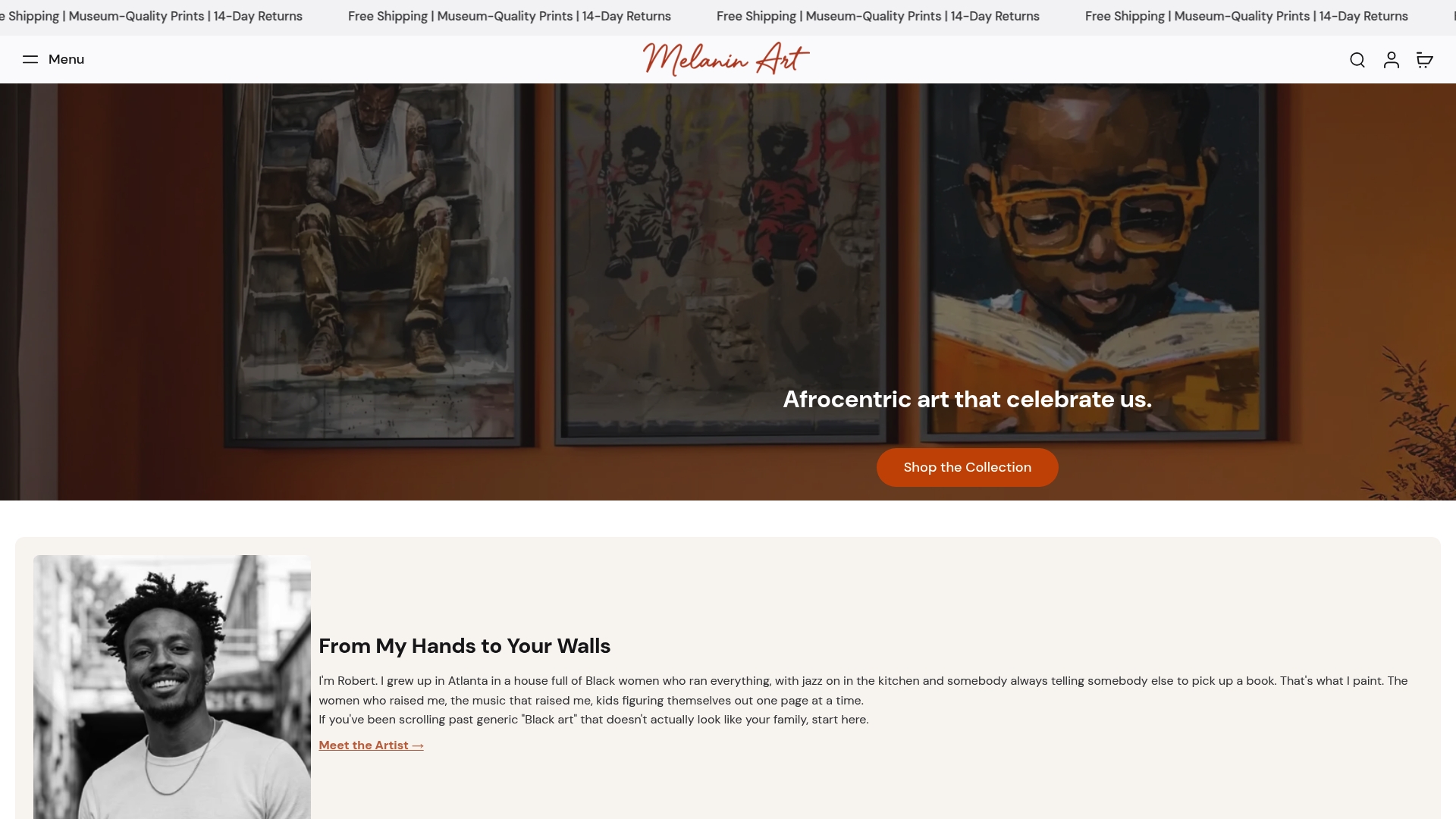
Whether you’re anchoring your room with a large figurative canvas or adding a bold abstract print to a gallery wall, the Afrocentric canvas art catalog offers customizable sizing and framing options to fit any space. Start with the African girls colorful wall art for an immediate burst of joy, community, and color that celebrates Black womanhood in a way few prints can match. Your walls deserve art that means something.
Frequently asked questions
What colors are best for Afrocentric living room decor?
Earthy neutrals like ochre, browns, and off-whites create a grounded base, while bold cultural accents in deeper jewel tones or vibrant primaries reflect both tradition and vibrancy.
How do I keep my Afrocentric living room from looking too busy?
Balance standout patterns with understated solids and neutral textures so the eye has places to rest between bold focal points.
Where can I find authentic Afrocentric art and textiles?
Seek out trusted Black-owned retailers, local artists, or artworks sourced from African countries where cultural context and craft tradition are clearly communicated.
What patterns are popular for Afrocentric decor?
Mudcloth, Kuba cloth, Kente stripes, and Ankara wax print are the most iconic pattern choices for building an authentic Afrocentric visual language in any room.