

Melanin painting is defined as the artistic practice of portraying the full complexity of Black skin tones through specialized techniques that emphasize color variation, layered depth, and physical presence. Artists like Karen Gunderson and Amoako Boafo have pushed this practice into the center of contemporary Afrocentric art, each developing methods that treat Black skin not as a background element but as the primary subject. The result is a body of melanin art that is technically demanding, culturally affirmative, and visually unlike anything produced through conventional portraiture.
1. What melanin painting actually means as an art practice
Melanin painting is not a single technique. It is a commitment to rendering Black skin with the depth, nuance, and dignity it deserves. Historically, Black bodies were relegated to background roles in Western portraiture, with skin treated as a flat or secondary detail. Contemporary melanin paintings reverse that entirely, placing Black skin at the center of every compositional decision. This shift is both technical and political.
The practice draws on oil, acrylic, and watercolor traditions, but the defining characteristic is intentionality. Every color choice, every layer, and every mark exists to honor the complexity of melanin-rich skin. Melaninart’s collection of Afrocentric paintings reflects this same commitment, with original works by artist Robert Lawrence that treat Black identity as the subject, not the setting.
2. Layering blacks to capture skin tone complexity
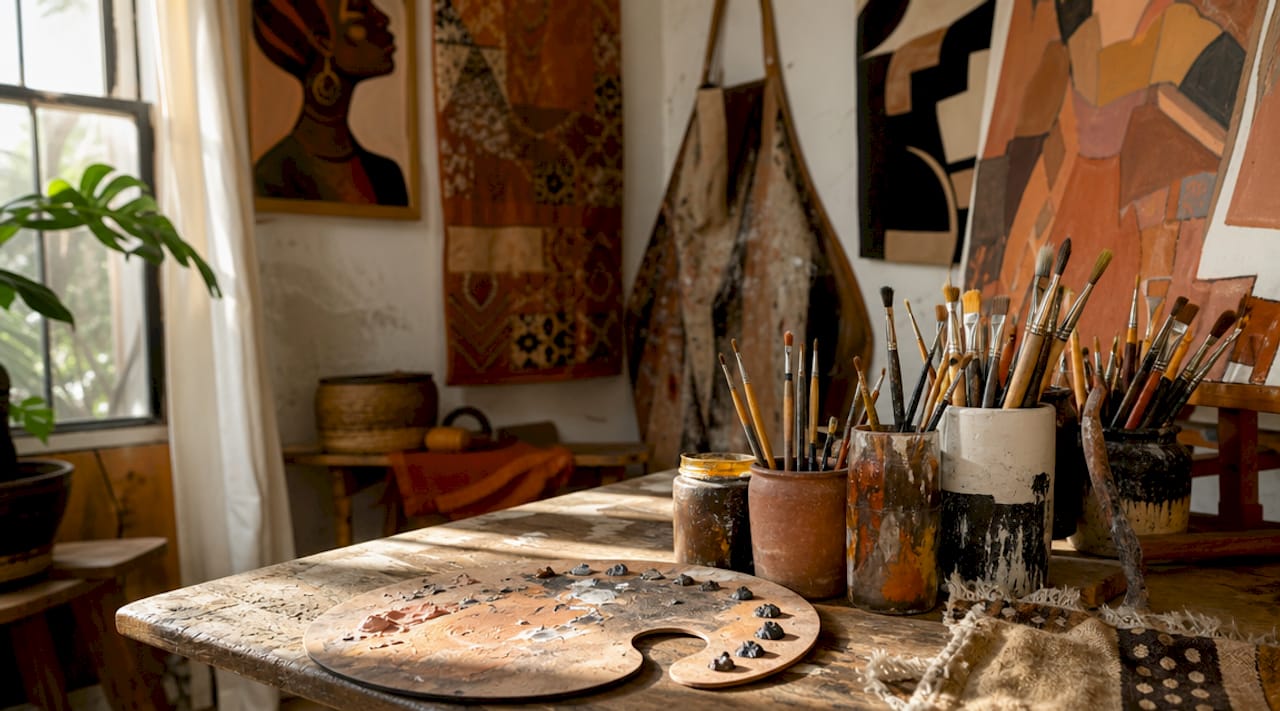
The most foundational melanin painting technique is layering multiple distinct blacks rather than treating black as a single flat color. Karen Gunderson builds her paintings using peach black, ivory black, and lamp black, each of which carries a different undertone that emerges under changing light. This means a single painted surface can read as warm, cool, or neutral depending on how light hits it. That variability is what creates the illusion of life.
The process works through thin, translucent layers applied in sequence. Each layer modifies the one beneath it, building a chromatic depth that a single opaque coat could never achieve. Gunderson’s paintings require targeted lighting to fully reveal the kinetic quality she builds into the surface. Without the right light, the motion disappears.
- Start with a value structure map before applying any color. Know where your lights, midtones, and darks fall before the first brushstroke.
- Apply thin glazes rather than thick coats. Transparency is what allows undertones to interact.
- Rotate between warm and cool blacks across layers to create the color shifts that make skin feel alive.
- Test each black paint separately under your studio lighting before committing to a palette.
Pro Tip: Not all blacks behave the same way. Peach black reads warmer and darker than lamp black, which leans slightly cooler. Mixing them without understanding their individual undertones flattens the skin tone rather than deepening it.
3. Finger-painting and the power of direct contact
Amoako Boafo’s approach to melanin canvas art removes the brush entirely. His finger-painting method uses direct fingertip contact to transfer paint to canvas, embedding the physical impression of skin into the surface of the work. The result is a sculptural warmth that brush application cannot replicate. You can see the body in the painting because the body made the painting.
This technique carries cultural weight that goes beyond aesthetics. The impression of skin on paint becomes a metaphor for presence and recognition. Boafo’s figures do not recede into their backgrounds. Their skin is foregrounded, made primary through the very act of bodily mark-making. That embodied Blackness challenges Western portraiture norms that have historically minimized or abstracted Black physical presence.
“Boafo’s finger-painting is a technical and cultural innovation that communicates an embodied Blackness and challenges traditional Western portraiture norms.” — FAB L’Style
The cultural implications of this method are direct:
- Skin touching canvas collapses the distance between artist, subject, and viewer.
- The tactile surface communicates dignity and visibility without requiring explanation.
- Body movement becomes part of the artwork’s meaning, not just its execution.
4. Brush techniques vs. direct contact painting
Both approaches produce powerful melanin wall art, but they serve different expressive goals. Understanding the difference helps you choose the right method for what you want to say.
| Approach | Visual style | Cultural effect | Best for |
|---|---|---|---|
| Layered brush technique | Subtle, luminous depth | Contemplative, meditative presence | Complex skin tone gradients |
| Direct finger-painting | Sculptural, tactile warmth | Immediate, embodied presence | Portraiture emphasizing dignity |
| Combined methods | Textured and luminous | Layered cultural meaning | Experimental melanin art |
Brush-mediated application gives you control over translucency and value structure. You can build a painting slowly, correcting and refining across sessions. The tradeoff is a degree of distance between the artist’s body and the surface. Finger-painting sacrifices some of that control for immediacy. The mark is faster, more physical, and harder to revise. What you gain is a surface that carries the literal impression of human contact, which is a different kind of truth than what a brush can deliver.
5. Synthetic melanin and experimental mixed-media approaches
The frontier of melanin inspired artwork extends into materials science. Synthetic eumelanin pigments can be combined with silica matrices through sol-gel processing to create materials with tunable optical properties. This means artists working in mixed-media contexts can engineer how their surfaces absorb and reflect light at a level that natural pigments alone cannot achieve.
The practical implications are significant. Sequential acid-base reaction routes in sol-gel synthesis yield higher melanin absorption and lower lightness values, producing surfaces with intense chromatic depth. For an artist, that translates to a painted surface that reads darker and richer than conventional pigment allows, with optical behavior that shifts under different light sources.
| Sol-gel condition | Effect on pigment | Visual result |
|---|---|---|
| Acid-catalyzed route | Lower dispersion efficiency | Lighter, less saturated surface |
| Base-catalyzed route | Higher absorption | Deeper, more chromatic surface |
| Sequential acid-base | Maximum pigment dispersion | Richest chromatic intensity |
The caution here is real. Translating lab-grade sol-gel processes into a working studio requires materials knowledge that most painters do not have. This is an area where collaboration between artists and materials scientists produces the most interesting results. The technology exists. The artistic application is still being invented.
Key takeaways
Melanin painting produces its most powerful results when artists treat Black skin as a complex optical subject, not a flat tone, combining layered technique with intentional cultural meaning.
| Point | Details |
|---|---|
| Layer multiple blacks | Use peach black, ivory black, and lamp black together to create color shifts that make skin feel alive. |
| Build value structure first | Map lights, midtones, and darks before applying any color layer. |
| Consider tactile methods | Finger-painting creates sculptural warmth and cultural presence that brush application cannot replicate. |
| Match technique to intent | Brush layering suits gradients; direct contact suits portraiture emphasizing dignity and embodiment. |
| Explore material innovation | Synthetic melanin-silica hybrids offer tunable optical depth for experimental mixed-media work. |
Why melanin painting is the most honest form of portraiture I know
When I paint Black skin, I am not trying to approximate a color. I am trying to account for light, movement, memory, and presence all at once. The moment I started treating black as a family of colors rather than a single flat decision, everything in my work changed. The skin started to breathe. That shift, from black as absence to black as complexity, is what separates melanin painting from conventional portraiture.
What strikes me most about Boafo’s finger-painting is that it makes the act of seeing someone a physical event. The artist’s body is in the work. That is not a technique. That is a statement about who deserves to be seen and how. I think about that every time I work on a portrait. The abstract melanin canvas art I have developed at Melaninart comes from the same conviction: Black skin is not a background. It is the whole point.
The synthetic melanin research is genuinely exciting to me, not because I want to run a chemistry lab, but because it confirms what painters have always known intuitively. The optical behavior of melanin is extraordinary. Science is just now catching up to what Black artists have been expressing for generations.
— Robert
Explore authentic melanin art collections at Melaninart
Melaninart carries a curated selection of original paintings reproduced as museum-grade archival prints, each created from original oil or watercolor works by artist Robert Lawrence. The Afrocentric art collection features melanin-rich portraiture and cultural scenes that apply the layering and presence-focused techniques discussed in this article. For a more forward-looking perspective, the Afrofuturism collection extends these traditions into speculative and visionary imagery. Every print ships with customizable framing and sizing options, making it straightforward to bring gallery-quality melanin wall art into your home or workspace. These are not decorations. They are cultural statements made with the same intentionality this article describes.
FAQ
What is melanin painting?
Melanin painting is the practice of portraying Black skin tones using specialized techniques that emphasize color layering, light interaction, and physical presence. It treats melanin-rich skin as the primary subject of a composition rather than a background element.
How do artists capture realistic Black skin tones in painting?
Artists like Karen Gunderson use multiple distinct blacks, including peach black, ivory black, and lamp black, applied in thin translucent layers to create the color shifts and depth that make Black skin tones appear lifelike and three-dimensional.
What makes Amoako Boafo’s technique unique?
Boafo paints directly with his fingertips, embedding the physical impression of skin into the canvas surface. This method creates sculptural warmth and communicates dignity and presence in a way that brush application cannot replicate.
Can acrylic paint be used for melanin painting?
Acrylic melanin painting is fully viable. Acrylics support thin glazing layers and dry quickly, which suits the value-building process. The key is using translucent glazes rather than opaque coats to preserve the color interaction between layers.
What is synthetic melanin used for in art?
Synthetic eumelanin combined with silica through sol-gel processing creates materials with tunable light absorption and chromatic intensity. Artists working in mixed-media contexts can use these materials to achieve optical depth beyond what conventional pigments allow.