

Lowcountry art is defined as a regional visual tradition that documents the coastal Southern landscape, vernacular architecture, and Gullah Geechee cultural heritage of South Carolina, Georgia, and the surrounding tidewater zones. What separates this tradition from decorative landscape painting is its preservation mission: as coastal development erases Praise Houses, crabbing shacks, and slave cabins from the physical world, painters are stepping in as the last reliable witnesses. The technique most central to this mission is chiaroscuro, the dramatic interplay of light and shadow that transforms a weathered wooden structure into something monumental. Understanding lowcountry art means understanding why these humble buildings deserve that treatment.
What is lowcountry art and why does it matter for preservation?
Lowcountry art captures the vernacular architecture and cultural memory of the coastal South through painting, photography, and mixed media. Vernacular architecture refers to structures built by ordinary people from local materials for practical purposes. In the Lowcountry, that means small wooden Praise Houses where enslaved communities gathered for worship, crabbing shacks perched over tidal creeks, and former slave cabins standing in the shade of ancient live oak trees.
These structures share three defining characteristics:
- Impermanence. Built from wood and exposed to salt air, flooding, and neglect, they deteriorate faster than brick or stone monuments.
- Invisibility. Historic preservation programs have historically prioritized plantation houses and civic buildings over the structures that working-class and enslaved people actually used.
- Cultural density. A single Praise House contains more living cultural history than most formally designated landmarks. It represents the origin point of Gullah Geechee spiritual practice, community governance, and musical tradition.
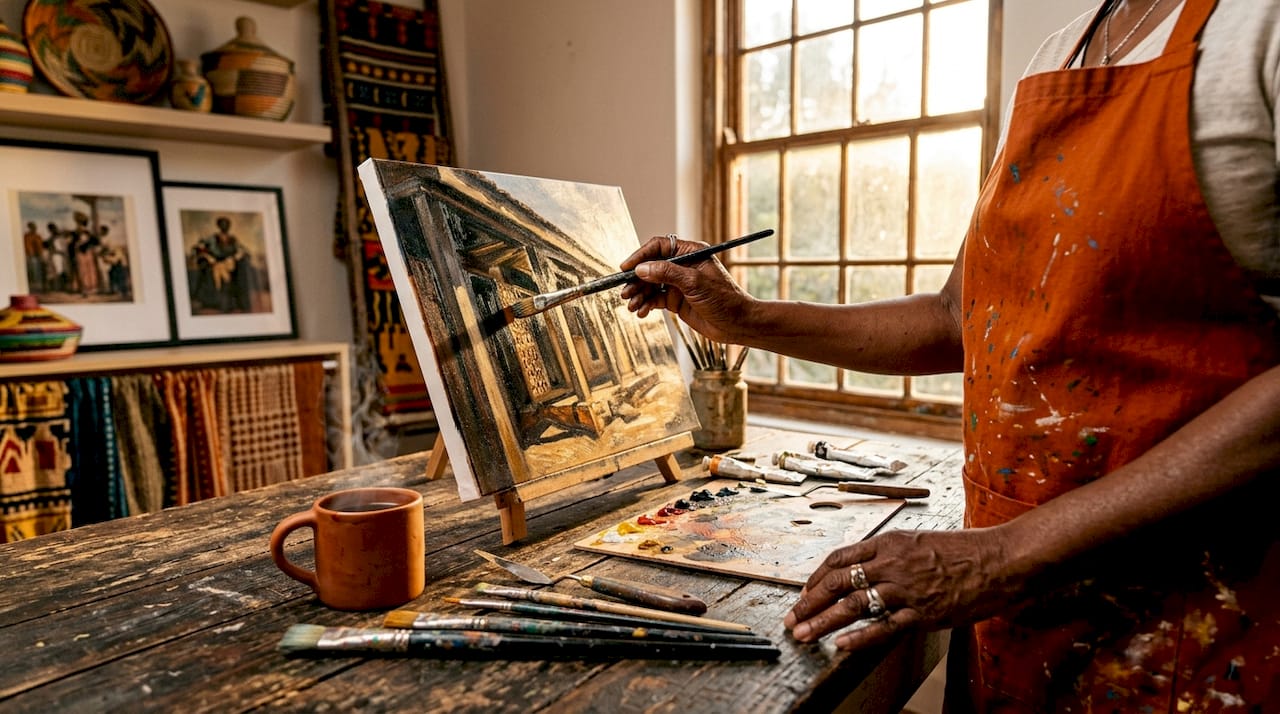
Chiaroscuro dramatizes these structures by using deep shadow to frame a building and concentrated light to pull it forward, giving it the visual weight of a cathedral. The effect is not accidental. It is a deliberate argument: this building matters.
Pro Tip: When you look at a Lowcountry painting and notice that a crabbing shack is lit like a Rembrandt portrait, you are watching an artist make a preservation argument. The lighting is the thesis.
Katelyn Chapman, the 2026 Griffith-Reyburn Lowcountry Artist of the Year, works in realism and Southern Gothic to depict working-class rural South subjects at life-size scale. Her planned tondo paintings frame everyday Lowcountry objects inside salvaged original materials, pulling the viewer into direct physical relationship with the subject. That scale is itself a preservation act. You cannot dismiss something you are standing inside of.
Cultural and environmental roots of the Lowcountry’s artistic mission
The preservation urgency behind Lowcountry art connects directly to the Gullah Geechee people, descendants of West and Central African enslaved people who developed a distinct language, cuisine, spiritual practice, and material culture along the coastal Southeast. Their heritage is the primary subject that Lowcountry artists are racing to document.
Four interconnected forces shape this cultural context:
- The Gullah Geechee Cultural Heritage Corridor, created by Congress in 2006, protects culture, natural resources, and historic sites across a four-state coastal region. Administered as a National Heritage Area by the National Park Service, it is one of the few federally recognized areas defined by a specific cultural community rather than geography alone.
- Live oak trees and waterways serve as more than scenic backdrops. These natural elements function as symbolic anchors in Lowcountry paintings, tying the depicted structures to environmental heritage and signaling that the culture and the land are inseparable.
- Maritime working-class life provides the economic and social context for most vernacular structures. Crabbing shacks, fish houses, and dock buildings represent the labor economy that sustained Gullah Geechee communities for generations after emancipation.
- The Gullah/Geechee CREATE program merges coastal cleanup with art-making on historic St. Helena Island, converting marine debris into artworks that educate the public on coastal resilience. This program treats environmental stewardship and cultural preservation as the same act.
Lowcountry art galleries that engage seriously with this tradition do not present the region as a postcard. They present it as accumulated time, presence, and memory, asking viewers to read a painting the way an archaeologist reads a site.
Contemporary initiatives keeping Lowcountry art preservation alive
Several institutions and grant programs are now formalizing what individual artists have been doing informally for decades.
| Initiative | Focus | Preservation Goal |
|---|---|---|
| Griffith-Reyburn Lowcountry Artist of the Year | $6,000 production grant for exhibition works | Supports artists depicting working-class coastal life at scale |
| Jonathan Green Maritime Cultural Center | Opened 2026 at USCB Beaufort | Exhibitions and research on maritime life and African Diaspora contributions |
| Park Circle Gallery “Lowcountry in Layers” | Photographic and mixed media exhibition | Frames the region as historical strata, not simple landscape |
| Gullah/Geechee CREATE | Community art from marine debris | Connects environmental stewardship with cultural education |
The Jonathan Green Maritime Cultural Center represents a significant institutional shift. Jonathan Green is one of the most recognized Lowcountry artists working today, known for paintings that depict Gullah Geechee community life in vivid, flattened color fields. A center bearing his name at a public university signals that Lowcountry art as educational stewardship has moved from the margins of art history into the academic mainstream.
The grant structure behind the Artist of the Year award also deserves attention. Production grants covering living expenses allow artists to focus on creating substantial exhibition pieces rather than spending their time on marketing or commercial commissions. That distinction matters because large-scale preservation work takes time that the market rarely funds on its own.
How to engage with and support Lowcountry art preservation
Recognizing the preservation dimension of Lowcountry art changes how you look at it and how you support it. Here is where to start:
- Look for chiaroscuro as a signal. When a painting uses dramatic shadow to frame a modest building, the artist is making a deliberate argument about that structure’s cultural importance. Read the lighting as editorial content.
- Seek out Gullah Geechee-specific collections. Lowcountry art galleries that specialize in Gullah Geechee subjects, such as the collections at Melaninart featuring crabbing culture wall art and coastal fishing traditions, present vernacular heritage as fine art rather than folk curiosity.
- Support living artists directly. Purchasing original work or archival prints from artists working in this tradition funds the time they need to produce preservation-focused pieces. Grants like the Griffith-Reyburn award help, but collector support sustains careers.
- Connect with the Gullah Geechee Cultural Heritage Corridor. The National Heritage Area runs public programs, educational resources, and community events that connect art appreciation with on-the-ground preservation work.
- Look for spiritual architecture. Paintings depicting Lowcountry churches and Praise Houses, such as the Lowcountry church art available through Melaninart, document the spiritual infrastructure of Gullah Geechee life that no formal landmark registry has fully captured.
Pro Tip: When buying Lowcountry art online, check whether the artist or platform provides context about the depicted structure. A painting with provenance notes about the specific Praise House or crabbing community it depicts is a primary historical document, not just decor.
Key takeaways
Lowcountry art functions as active historic preservation, using chiaroscuro and cultural specificity to give endangered vernacular structures the monumental status that formal institutions have denied them.
| Point | Details |
|---|---|
| Chiaroscuro as argument | Dramatic light and shadow in Lowcountry paintings elevate humble structures to monument status deliberately. |
| Vernacular architecture at risk | Praise Houses, crabbing shacks, and slave cabins disappear faster than any preservation program can formally protect them. |
| Gullah Geechee context is central | The Gullah Geechee Cultural Heritage Corridor and programs like CREATE connect art directly to living cultural preservation. |
| Institutional support is growing | The Jonathan Green Maritime Cultural Center and production grants signal that Lowcountry art preservation has academic and civic backing. |
| Collectors drive sustainability | Purchasing from artists and culturally focused platforms like Melaninart directly funds the time artists need for preservation-scale work. |
Why I think we underestimate what these painters are actually doing
I have spent years looking at paintings of the coastal South, and the ones that stay with me are never the ones that make the Lowcountry look pretty. They are the ones that make a rotting crabbing shack look like it could anchor a cathedral ceiling. That is not sentiment. That is a technical and cultural argument executed in paint.
What strikes me most is how little credit these artists receive as historians. A Lowcountry painting of a Praise House under live oaks is doing something that a photograph cannot: it is asserting that this building has the same visual gravity as the Lincoln Memorial. Chiaroscuro is not decoration. It is a claim about what deserves to be remembered.
The Gullah Geechee communities who built these structures were systematically excluded from formal historic preservation for most of American history. Artists who paint these buildings with the same technical reverence applied to European cathedrals are correcting that record. When I look at Gullah Geechee wall art that captures a weathered church or a tidal creek dock in full dramatic light, I see an act of cultural justice as much as an aesthetic choice.
My advice: do not buy Lowcountry art because it matches your walls. Buy it because you want a piece of American history that the textbooks left out.
— Robert
Discover and collect unique Lowcountry artwork
Melaninart carries a curated collection of Gullah Geechee and Lowcountry art that treats vernacular heritage as fine art. Each piece in the Gullah Geechee art collection is reproduced from original oil or watercolor paintings as museum-grade archival prints, built to the standard of gallery display. The collection spans coastal fishing life, crabbing culture, spiritual architecture, and community scenes that document the living history of the Lowcountry. For collectors and preservation advocates who want their walls to carry cultural weight, this is where to start. Every purchase supports the artists and the platform dedicated to keeping this heritage visible.
FAQ
What is Lowcountry art?
Lowcountry art is a regional visual tradition documenting the coastal Southern landscape, Gullah Geechee cultural heritage, and vernacular architecture of South Carolina and Georgia. It functions as both fine art and historic preservation, capturing structures and communities that formal institutions have often overlooked.
What makes Lowcountry vernacular architecture significant?
Structures like Praise Houses, crabbing shacks, and slave cabins represent the daily life, spiritual practice, and labor economy of Gullah Geechee communities. They are disappearing faster than preservation programs can protect them, making artistic documentation one of the most reliable records of their existence.
How does chiaroscuro work in Lowcountry paintings?
Chiaroscuro uses dramatic contrasts of light and shadow to give subjects visual weight and presence. In Lowcountry art, this technique frames modest wooden structures as monumental, arguing through lighting alone that these buildings carry the same cultural significance as formally recognized landmarks.
Where can I buy Lowcountry art that supports cultural preservation?
Melaninart offers museum-grade archival prints of Gullah Geechee and Lowcountry subjects, including coastal fishing, crabbing culture, and spiritual architecture. Purchasing directly from culturally focused platforms funds artists working in the preservation tradition.
What is the Gullah Geechee Cultural Heritage Corridor?
The Gullah Geechee Cultural Heritage Corridor is a National Heritage Area created by Congress in 2006 to protect the culture, natural resources, and historic sites of Gullah Geechee communities across a four-state coastal region. It is administered by the National Park Service and is unique for being defined by a specific cultural community rather than geography alone.